Airbnb in Turkey: What to Know Before You Rent Out Your Home (2026)
Permit, neighbours' consent, fines and taxes: what to know before you rent your home in Türkiye to holiday guests.

On this page
If you rent out an apartment through Airbnb in Turkey or a similar platform for up to 100 days, you have needed a permit from the Ministry of Culture and Tourism since 2024. In an apartment building, every residential owner in the building must agree. Renting without a permit carries fines from 180,617 TL per unit in 2026.
Key facts (as of November 2026)
- The legal basis is Law No. 7464, in force since 1 January 2024.
- It covers every rental of 100 days or less per contract, whether through Airbnb, Booking.com or directly.
- Apartment in a building: a unanimous, notarised decision of all residential owners in the building. Detached houses and villas need no consent from neighbours.
- Fines in 2026: 180,617 TL per unit, rising to 903,088 TL and then 1,806,177 TL if the rental continues.
- Since 1 April 2026 Airbnb requires the permit number, the permit holder's name and the address in every listing.
Many buyers ask whether they can rent their home to holiday guests while they are away. In Türkiye the answer depends less on the platform than on the building. This guide explains the rules, what the permit requires, which taxes apply and what to check before you buy.
What does Law 7464 mean for Airbnb in Turkey?
Law No. 7464 on renting residences for tourism purposes was published on 2 November 2023 and has applied since 1 January 2024. Any rental of a residence for 100 days or less under one contract counts as a tourism rental. The guest's reason for staying does not matter: holiday, work, study and medical stays are treated the same.
Rentals longer than 100 days fall under ordinary lease law and need no permit. There is one catch: an owner without a permit who rents the same home out more than four times a year can still be treated as a tourism landlord. Single rooms may not be rented short-term; only the whole home can be.
What are the permit requirements?
- The owner applies: the owner registered on the title deed (tapu) applies online to the Ministry of Culture and Tourism. Foreign owners identify themselves with their passport.
- Registered as a residence: a current title deed record is required, and the unit must be registered as a residence.
- Unanimous consent: all owners of residential units in the same building must agree, with a notarised decision. A majority vote or a general clause in the building's management plan is not enough. Owners of shops and offices in the building do not need to sign.
- Complexes with several blocks: for up to five units per applicant, consent within the applicant's own block is enough. The Constitutional Court upheld this rule in December 2025. More than five units require consent across the whole complex and a business licence.
- Detached houses and villas: no consent from neighbours is needed, but you still need the permit.
- 25% cap: in buildings with more than three units, one person can hold permits for at most a quarter of the units.
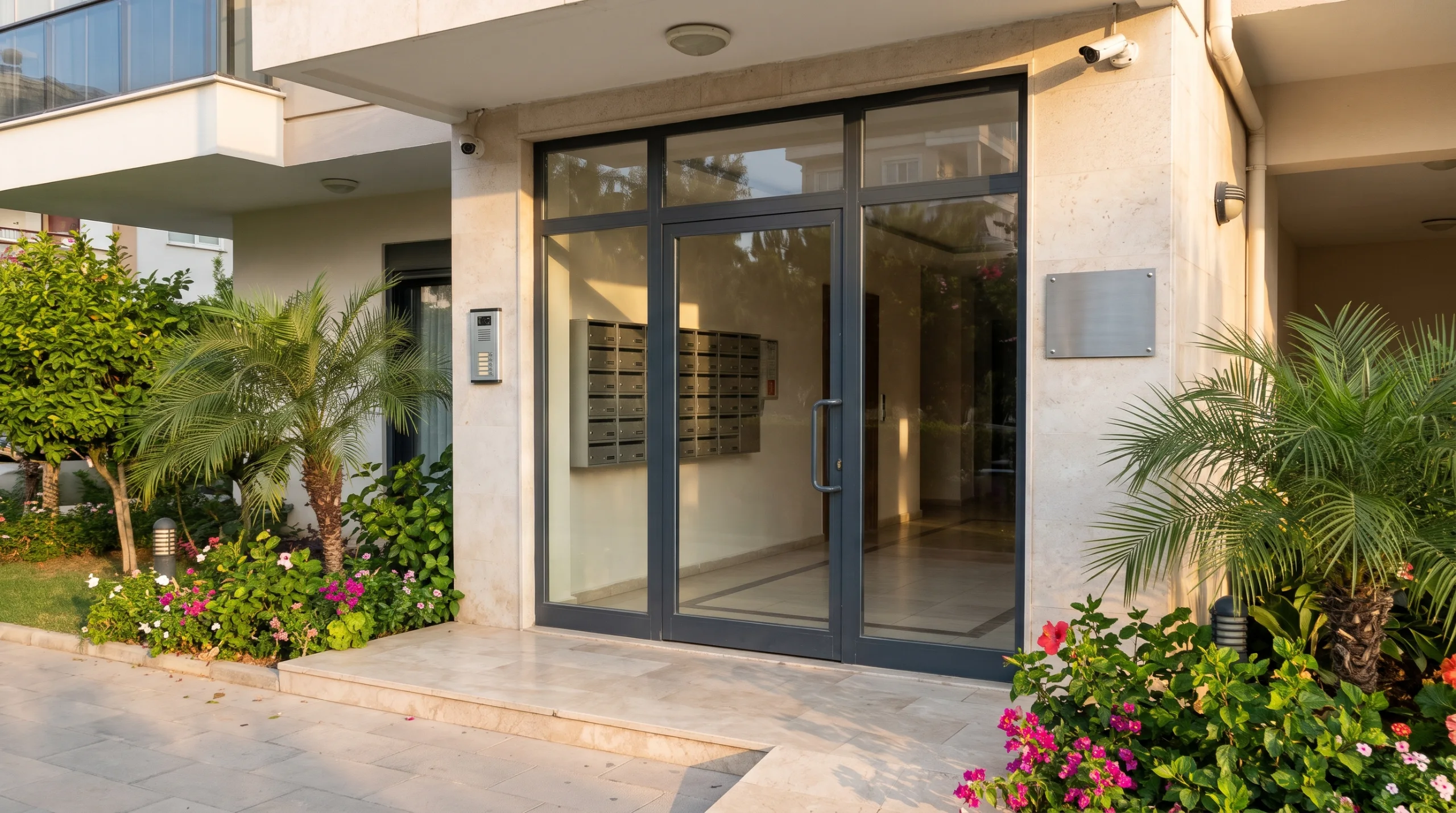
Once approved, the Ministry issues a plaque that must hang at the entrance of the home, and the permit number must appear in every listing.
What are the fines for renting without a permit?
| Violation | Fine in 2026 | approx. in euros |
|---|---|---|
| First detection, per unit | 180,617 TL | €3,250 |
| Rental continues after the 15-day deadline | 903,088 TL | €16,300 |
| Rental continues despite earlier sanctions | 1,806,177 TL | €32,500 |
| Brokering an unpermitted rental, per contract | 180,617 TL | €3,250 |
Euro amounts are rounded (exchange rate at the end of October 2026, about 55.5 TL per euro). The amounts are revalued every year. Platforms report the address, guests and permit number to the Ministry every month, so listings without a valid number stand out.
A permit also brings duties: the home must match what was registered, be cleaned after every guest, and guests must be told the building rules. Since 27 October 2026, missing or outdated documents must be fixed within 30 days, otherwise the permit is cancelled.
What does Airbnb require from hosts in Turkey?
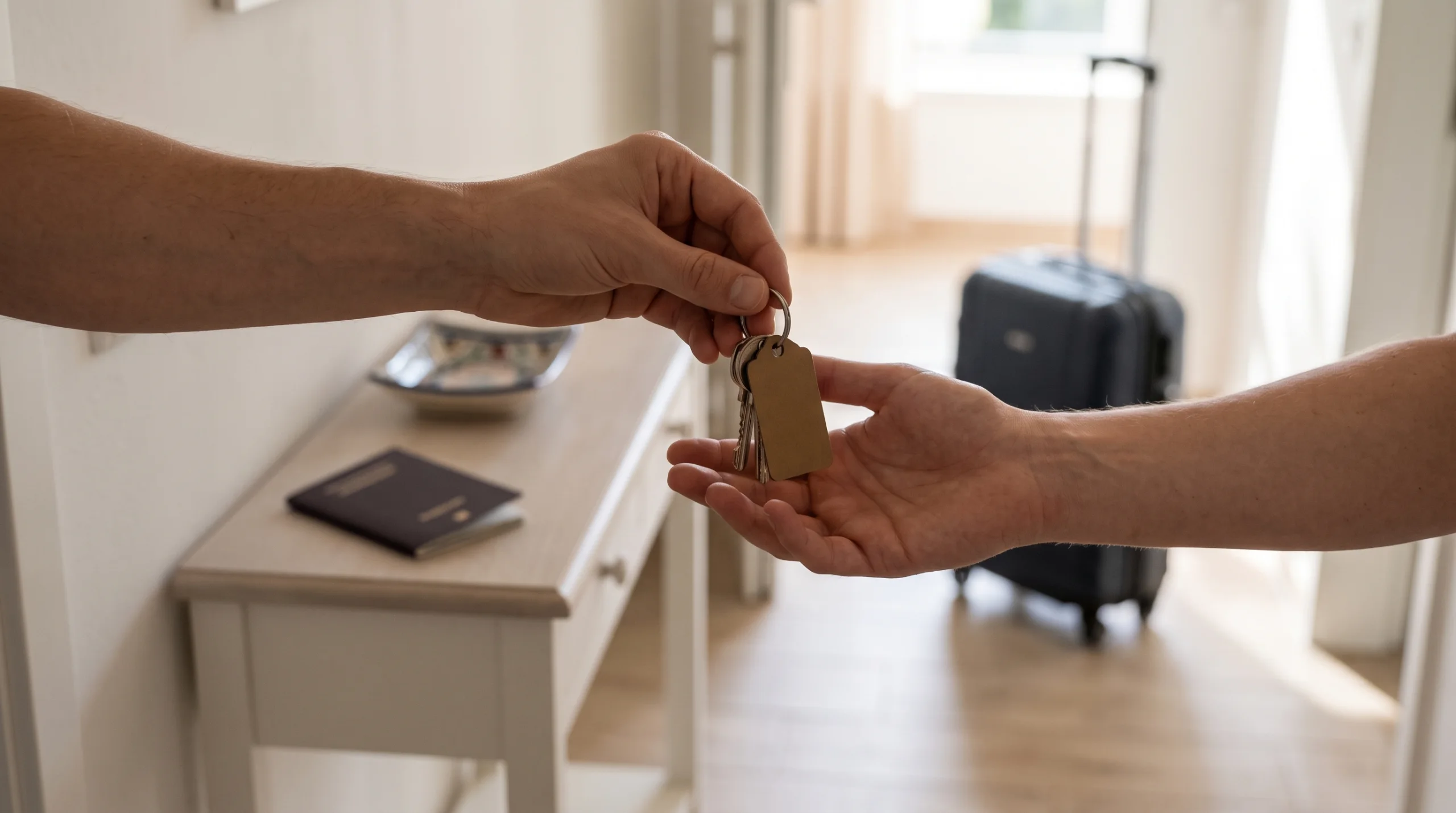
Airbnb enforces the rules itself. Since 1 April 2026, hosts in Türkiye must enter three details for each listing: the permit number, the holder's name exactly as on the Ministry document, and the address. Listings with missing or outdated details can no longer be booked, and single rooms can no longer be offered short-term on Airbnb in Turkey.
Guests must be registered under the Turkish Identity Notification Law (Kimlik Bildirme Kanunu), and the Turkish data protection law (KVKK) applies. If you are not there yourself, a property management service usually handles this.
A bill on foreign booking platforms passed the relevant parliamentary committee in October 2026. It requires a licence, a representative in Türkiye and a cap on commissions. If adopted, it is due to take effect on 1 January 2027, and platforms would then only be allowed to list permitted homes.
Which taxes apply to holiday rentals?

In Türkiye: rental income from a home in Türkiye is taxable there, and the return for the previous year is due in March. You need a Turkish tax number. Whether short-term rental is private rental income or a business is disputed. Since 2025 the tax administration has tried to treat permit holders as businesses charging 20% VAT. The Council of State (Danıştay) suspended that instruction in interim proceedings, and the administration's objection failed in summer 2026. On that view, renting without hotel-style services such as breakfast, daily cleaning or a reception stays private rental income, without VAT or accommodation tax. There is no final ruling yet.
Your home country: under most tax treaties, income from property in Türkiye is taxed in Türkiye; how your country of residence treats it differs. For Germany, it is usually exempt but raises the rate on your other income (progression clause). Ask a tax adviser for your case. Our guide to taxes and expenses covers the costs of buying.
What should buyers check if they plan to rent out?
- Ask before you buy: does the building already have permits, and would every owner agree? A single neighbour can block the permit.
- New builds: ask whether the developer arranges consent before the units are sold. With many owners it becomes harder.
- Check “with permit” claims: the permit is issued to the owner. Find out before buying whether you need to apply again after the sale.
- Villa or detached house: no neighbour consent, but the permit, plaque and guest registration still apply.
- Plan without holiday lets: rentals longer than 100 days need no permit. Make sure the purchase works for you on that basis too.
- Service charge and complex rules: ask what the service charge (aidat) covers and whether the complex has its own rules for holiday guests, for example for the pool or access cards.
Looking for a home you want to use yourself and rent out at times? Talk to us before you buy and we will go through the questions about the building together. You can download our free buyer's guide or contact us.
Note: this article is not legal or tax advice. On request we can put you in touch with an independent lawyer; whether and on what terms you instruct them is your decision.
Sources
- Law No. 7464 on renting residences for tourism purposes (mevzuat.gov.tr)
- Ministry of Culture and Tourism, Muğla directorate: application guide
- Constitutional Court, decision 2025/147 E., 2025/275 K., 25 December 2025
- Regulation amendment, Official Gazette No. 33413, 27 October 2026
- 2026 fines (Muğla Chamber of Commerce and Industry, June 2026)
- Airbnb: Responsible hosting in Türkiye
- Council of State on taxing short-term rentals (NTV, June 2026)
- Bill on booking platforms (Euronews, October 2026)
Frequently asked questions
Do I need a permit for Airbnb in Turkey?
Yes. Since 1 January 2024 any rental of a residence for 100 days or less per contract needs a permit from the Ministry of Culture and Tourism (Law No. 7464), whether through Airbnb, Booking.com or directly.
What if one neighbour does not agree?
For an apartment, every residential owner in the building must give notarised consent. Without it there is no permit, and you can only rent for more than 100 days. Detached houses and villas need no consent.
Can a foreign owner apply for the permit?
Yes. The owner registered on the title deed applies online to the Ministry; foreigners identify themselves with their passport.
How high is the fine for renting without a permit?
In 2026 the fine is 180,617 TL per unit (about €3,250). If the rental continues after the 15-day deadline it rises to 903,088 TL and then 1,806,177 TL. The amounts increase every year.
How is Airbnb income from Turkey taxed?
It is taxable in Türkiye with a return due in March. Whether it counts as private rental or business income is still disputed in the courts. Your country of residence may also take it into account; ask a tax adviser.
You may also like