Spending the Winter in Türkiye: Climate, Residence, Health Cover and the Right Home
Mild climate, the 90-day rule, health cover and warm homes: what to know before spending the winter on the Turkish Riviera.

On this page
In short (November 2026)
- Climate: In Antalya, average daytime highs are about 15 °C in January and already 18 °C in March – much milder than northern Europe, but not beach weather.
- Stay: Germans and most EU citizens may stay 90 days within any 180 days without a visa. To stay all winter you need a residence permit.
- Health cover: German statutory insurance extends to Türkiye under a social security agreement (form T/A 11). For long stays, add private long-term travel health insurance.
- The home: heating, insulation and a complex that is lived in during winter matter most.
While fog and frost set in across northern Europe, many retirees on the Turkish Riviera sit on their balcony in a T-shirt at lunchtime. Spending the winter in Türkiye is no longer an insider tip: Antalya and Alanya offer a mild climate, good healthcare, direct flights and living costs that are usually below western European levels. To keep your winter in the south relaxed, it helps to know a few rules – from residence and health insurance to choosing the right home.
What is the winter weather like on the Turkish Riviera?
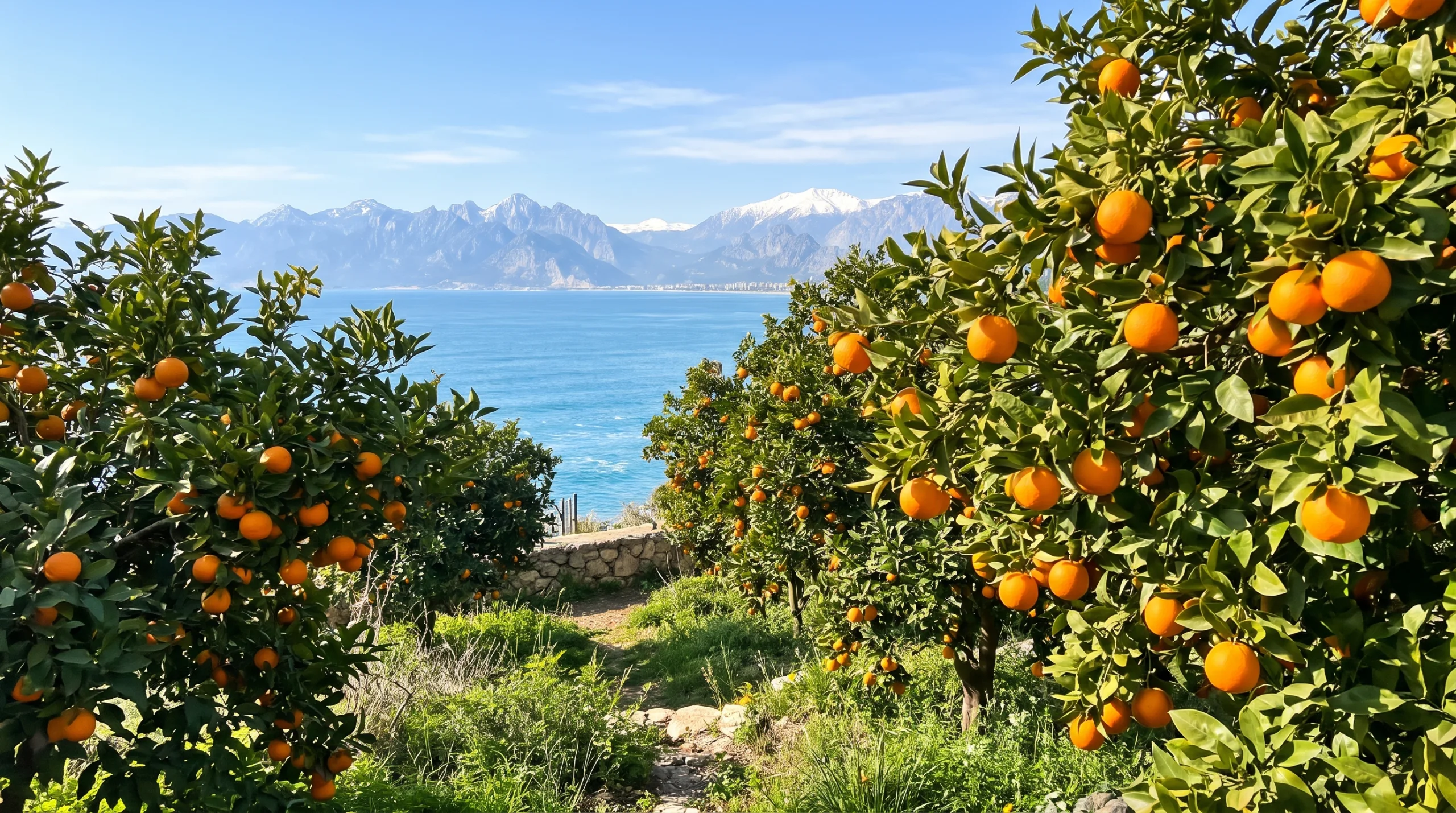
The Antalya region has a Mediterranean climate with mild, rather wet winters. Figures from the Turkish State Meteorological Service (MGM, averages 1930–2025) for the city of Antalya:
| Month | Avg. high | Avg. low | Sun per day | Rainy days |
|---|---|---|---|---|
| December | 16.7 °C | 7.7 °C | 4.8 h | 12 |
| January | 15.0 °C | 6.1 °C | 4.9 h | 12 |
| February | 15.6 °C | 6.4 °C | 5.7 h | 10 |
| March | 18.0 °C | 8.1 °C | 6.7 h | 9 |
Sunny, mild days alternate with rainy spells, and nights can be cool – so a well-heated home matters more than the pool. In February and March the orange trees blossom, and from the beach you can often see snow on the Taurus Mountains. Most people find the sea too cold for swimming in winter; heated indoor pools in many complexes fill that gap.
How long can I stay in Türkiye?
German citizens – and citizens of many other European countries – may stay up to 90 days within any 180-day period without a visa; Germans can even enter with their ID card. The 180 days are a rolling window: staying from early December to early March already uses up the 90 days, and a trip home for Christmas does not reset the clock. Check the rules for your nationality before you travel.
To stay longer, apply for a short-term residence permit (kısa dönem ikamet izni) via the e-İkamet portal before your 90 days run out. For tourist stays the migration office mainly asks for:
- valid health insurance for the entire period requested,
- an address (rental contract or your own home) – some neighbourhoods with many foreigners no longer accept new registrations,
- proof of sufficient funds and a clear travel plan,
- a passport valid at least 60 days beyond the permit.
Tourist applications have been checked more closely in recent years. Owners can also apply on the basis of their property if it is registered as a residence and meets the legal minimum value. Details in our guide to the residence permit.
Am I covered for health care during the winter?
The European Health Insurance Card is not valid in Türkiye. For people with German statutory health insurance, the German-Turkish social security agreement extends cover to temporary stays in Türkiye. You need form T/A 11, which you request from your health insurer before you travel. It gives access to state hospitals, university hospitals and contracted clinics via the Turkish social security institution (SGK) – according to the Turkish benefits catalogue. Other nationalities should check what their own insurer covers.
Many winter residents still prefer private clinics, where staff often speak English or German; these usually bill foreigners privately. Consumer advisers therefore recommend private travel health insurance with a long-term tariff, as standard travel policies usually cover only a few weeks. Make sure repatriation is included. Long-term care benefits are not available in Türkiye.
Residence, pension and taxes at home
If you only spend the winter in Türkiye and keep your home in Germany, you normally do not need to deregister. Your pension continues – on request even to a Turkish account – and you remain fully taxable in Germany and a member of your health insurer.
In Türkiye you become tax resident if you stay more than six months in a calendar year. A winter stay is spread over two calendar years and usually stays below that. If you rent out your Turkish home in summer, the rental income must be declared in Türkiye; double tax treaties prevent the same income being taxed twice. For your personal situation, talk to a tax adviser.
Where is the best place to spend the winter?
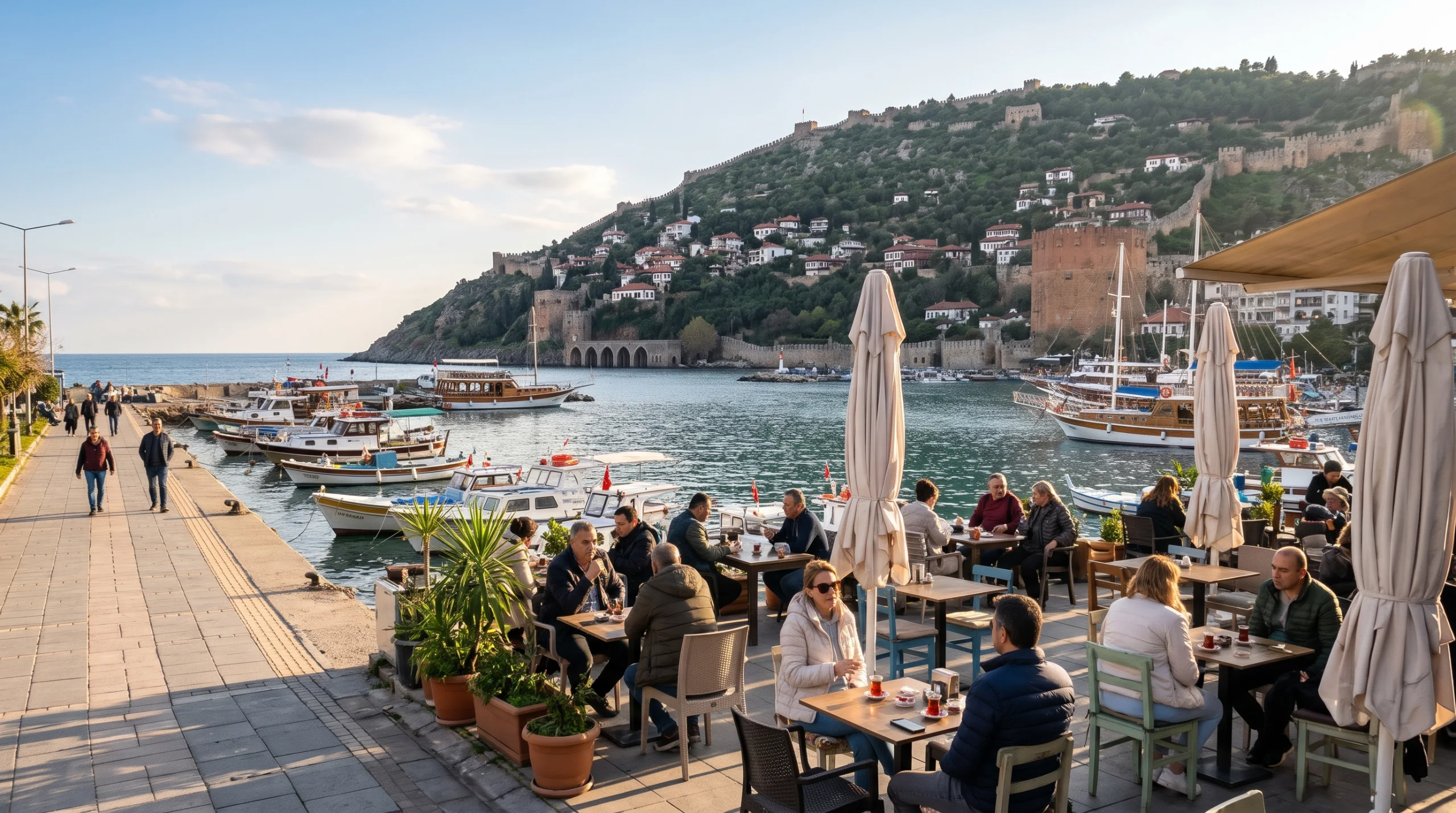
Not every resort suits winter. In many pure holiday villages, hotels, restaurants and shops close from November. For a longer stay we recommend places with year-round life:
- Antalya city (Konyaaltı, Lara, Muratpaşa): a big city with hospitals, shopping centres, tram, seafront promenade and old town – ideal if you want infrastructure and culture in winter too.
- Alanya: large German- and Scandinavian-speaking community, clubs, regular meet-ups and German-speaking doctors. The centre and Mahmutlar, Oba and Kestel stay lively in winter.
- Side, Belek, Kemer: beautiful but quiet in winter – best for those who want peace and have a car.
Antalya has one of the country’s largest airports, with direct flights to many European cities in winter too.
Rent or buy?
For your first winter, renting is a good way to get to know the area and the complex. Winter rents are usually lower than in high season; reputable landlords offer a written rental contract, which you also need for the residence permit.
If you plan several winters in the south, the maths often changes: with your own home there is no yearly search, your furniture and car stay there, and you can travel at short notice. In summer the flat can be let long-term or, with a permit, as a holiday rental (Law No. 7464). Our property management looks after the home while you are away. Running costs mainly include the complex’s service charge, property tax, DASK earthquake insurance and utilities (see taxes and expenses).
What makes a good winter home?
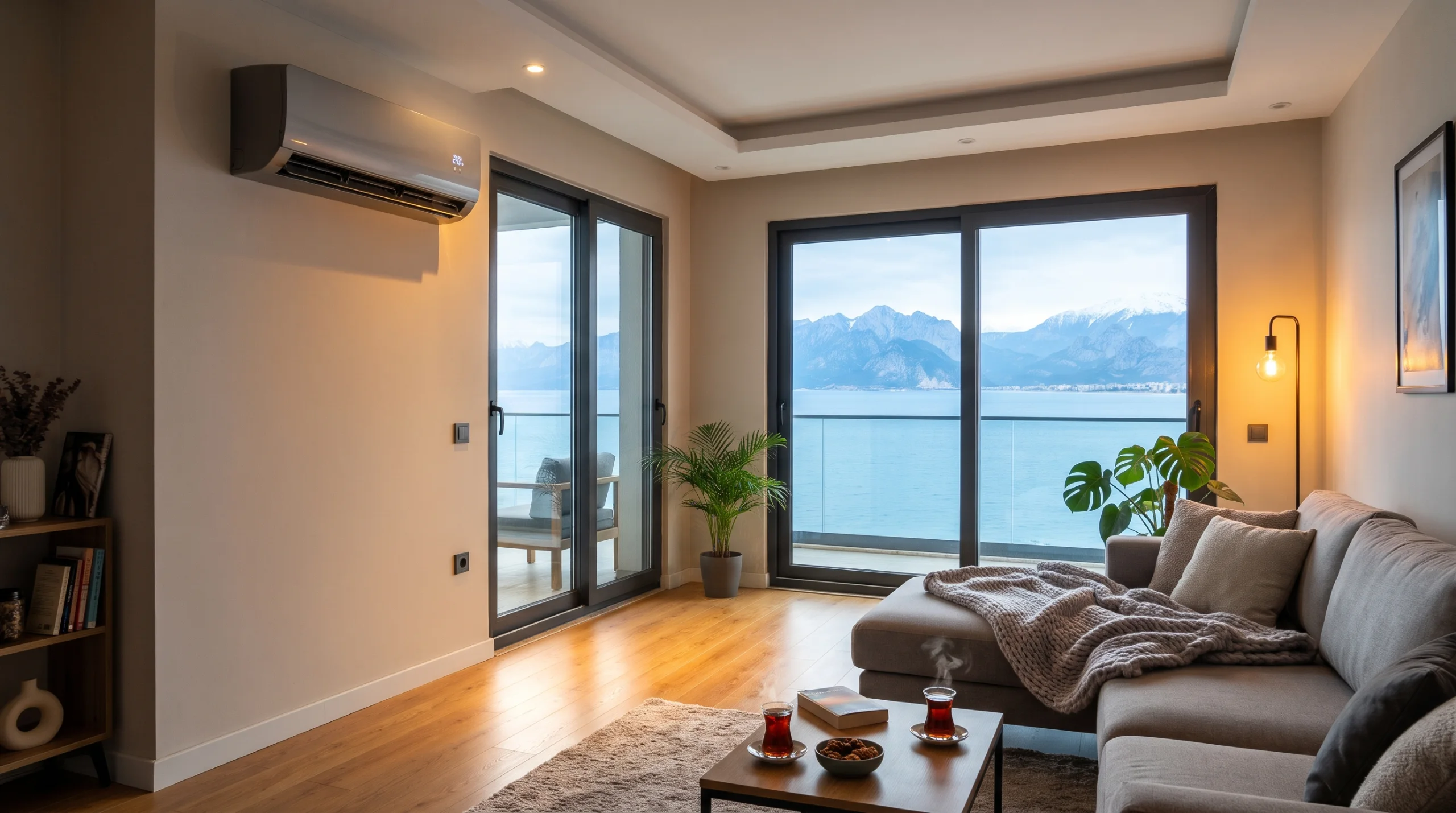
Many older flats on the Riviera were built for summer: no central heating, thin walls and single glazing. In January they get cool and damp. Look for:
- Heating: underfloor heating, a gas combi boiler or modern heat-pump air conditioning.
- Insulation and windows: insulated façade, double glazing, well-sealed balcony doors.
- Orientation and light: south- or west-facing flats get winter sun; ground floors are often cooler.
- A lived-in complex: one where people live in winter too – with caretaker, security and open facilities.
- Winter amenities: indoor pool, sauna, gym.
Modern new-build projects usually meet these points from the start; upgrading an older resale flat quickly gets expensive. See current apartments in Antalya – we are happy to show you homes by video or on a viewing trip.
Checklist for your winter in Türkiye
- Valid passport or ID card; length of stay planned (90/180 rule)
- Health cover: form T/A 11 (German statutory insurance) and private long-term travel health insurance
- A heated home with a written rental contract
- Staying more than 90 days: apply for a residence permit in time via e-İkamet
- Post, pension and banking at home organised (power of attorney, online banking)
- Important medication and prescriptions for the first weeks
Thinking about buying your own winter home? Download our free Türkiye buying guide or talk to us – in English, German or Turkish.
Sources
- MGM – Resmi İklim İstatistikleri Antalya (1930–2025)
- Wissenschaftliche Dienste des Bundestages: Aspekte des deutsch-türkischen Sozialversicherungsabkommens (WD 6 - 3000 - 007/25, 07.05.2025)
- krankenkassen.de: Krankenversicherung im Türkei-Urlaub (Formular T/A 11)
- Stiftung Warentest: Rente im Ausland – Lebensabend im Warmen
- Öner Hukuk: Kısa dönem ikamet izni 2026
- FFK Partner Hukuk: Turizm amaçlı ikamet izni 2026
- Hukukçular Evi: Kurzzeitvermietung nach Gesetz Nr. 7464
Frequently asked questions
How warm is Antalya in winter?
On long-term average (MGM 1930–2025), Antalya reaches about 15 °C during the day and about 6 °C at night in January; in March daytime highs are around 18 °C.
How long can I stay in Türkiye without a visa?
Germans and many other Europeans may stay up to 90 days within 180 days. For a longer stay, apply for a short-term residence permit via e-İkamet before that time runs out.
Does German statutory health insurance cover me in Türkiye?
Yes, via the German-Turkish social security agreement with form T/A 11 – according to the Turkish benefits catalogue. For long stays and private clinics, private long-term travel health insurance is recommended.
Do I need to deregister in Germany to spend the winter abroad?
Usually not. If you keep your home in Germany and only spend the winter abroad, you stay registered, taxable and insured at home.
What makes a good winter home in Türkiye?
Heating (such as underfloor heating or heat-pump air conditioning), good insulation, a south-facing aspect and a complex that is lived in during winter – features mostly found in new-builds.
You may also like