
Where Are Turkish Buyers Purchasing Property Abroad in 2026?

On this page
- Introduction: Turkish Buyers Entered a More Selective Overseas Real Estate Period in 2026
- What Are Turkish Buyers Looking at in 2026?
- Türkiye: Domestic Demand Remains Strong, and Interest from Turkish Buyers Abroad Continues
- Istanbul
- Antalya
- Mersin
- Bodrum
- Izmir
- Dubai and the UAE: Still Strong, but Requiring Greater Risk Awareness in 2026
- Spain: The Golden Visa Has Ended, but the Lifestyle Appeal and Secure European Market Remain Strong
- Alicante
- Málaga
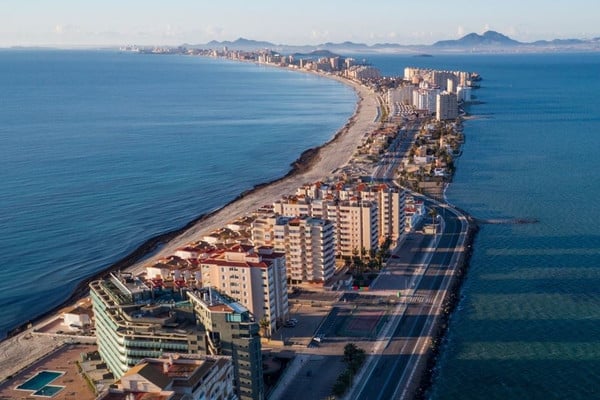
- Murcia
- Almería
- Barcelona
- North Cyprus: Accessible Entry, GBP Based Rental Income, and Legal Due Diligence
- What Should Country Selection Be Based on for Turkish Buyers Now?
- Alternative Markets: Why Should Greece and the UK Be Followed?
- Pre-Purchase Checklist
- Conclusion: In 2026, the Winning Investor Will Choose the Right Strategy, Not the Popular Country
- Frequently Asked Questions

Introduction: Turkish Buyers Entered a More Selective Overseas Real Estate Period in 2026
As we enter 2026, the real estate preferences of Turkish buyers are no longer limited to opportunities within Türkiye alone. Inflation, the search for foreign currency based assets, rental income expectations, lifestyle plans, and the need for long term capital preservation are leading Turkish investors to make more informed decisions both in Türkiye and abroad. As a result, one of the most important questions today has become: Where are Turkish buyers purchasing property abroad?
The answer to this question can no longer be reduced to a single country or a single investment motivation. While Türkiye remains a dynamic market supported by strong domestic demand and continued interest from Turkish speaking buyers living abroad, markets such as Dubai, Spain, and North Cyprus stand out for investors with different expectations. Some buyers are looking for foreign currency based rental income and global liquidity, while others seek quality of life in Europe, a second home at more accessible prices, or a long term investment opportunity.
At this point, overseas real estate investment for Turkish investors in 2026 has become more strategic. The end of the Golden Visa period in Spain, the need to monitor geopolitical risks in Dubai more carefully, the growing importance of legal processes in North Cyprus, and the more selective nature of real price performance in Türkiye are making investment decisions more data driven.
What Are Turkish Buyers Looking at in 2026?
Rental Income
Regular cash flow and foreign currency-based return potential.
Liquidity
Ability to sell the property when needed and a clear exit strategy.
Legal Security
Clarity of title deeds, permits, taxes, and local regulations.
Lifestyle Value
Holiday use, family ties, retirement, or long-term residence.
Risk Balance
Factoring in geopolitics, supply, exchange rates, and market fluctuations.
In this article, we will examine the main markets in 2026 from the perspective of real estate investment in Dubai, Spain, Türkiye and North Cyprus for Turkish buyers. The aim is not to give a simple answer to the question “which country is the best?”; it is to clearly show the strengths, risks, rental potential, liquidity, and positioning of each market according to the right investor profile.
Türkiye: Domestic Demand Remains Strong, and Interest from Turkish Buyers Abroad Continues
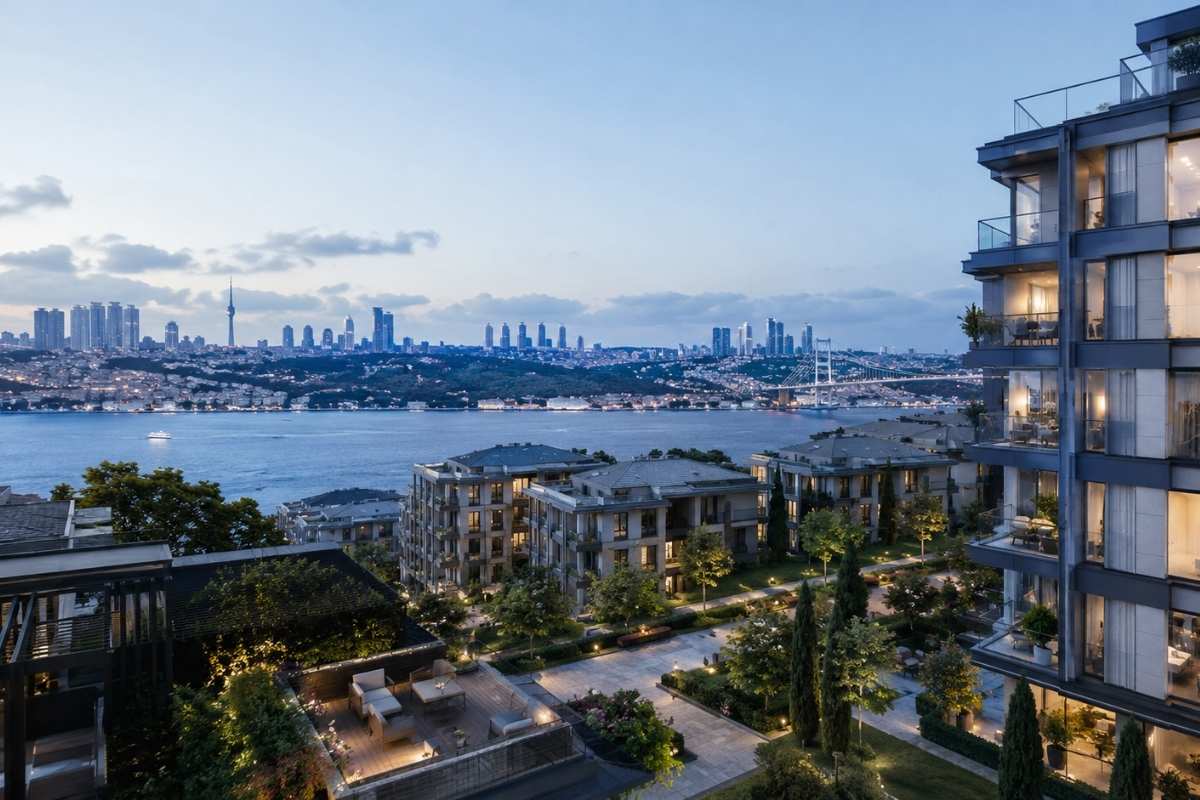
When evaluating the real estate preferences of Turkish buyers in 2026, it would be incomplete to view Türkiye only as a local market. Türkiye remains one of the main real estate markets supported by both strong domestic demand and continued interest from Turkish speaking buyers living abroad, especially in Europe.
In the domestic market, despite the high interest rate environment, housing is still seen by many buyers as a way to protect against inflation, generate rental income, and preserve long term value. Cash buyers, households looking to protect their savings through real estate, and investors seeking rental returns are among the most important groups supporting transaction volume in the Turkish housing market.
However, demand for Türkiye should not be interpreted only through buyers living inside the country. Turkish speaking buyers living in Germany, Austria, the Netherlands, Belgium, France, Switzerland, and other European countries also remain an important audience keeping real estate demand in Türkiye alive. For these buyers, owning property in Türkiye is not only a financial investment; it also includes motivations such as family ties, holiday use, retirement planning, rental income, and maintaining a connection with Türkiye.
For this reason, when answering the question “Where are Turkish buyers purchasing property abroad?”, Türkiye needs to be positioned separately. For Turkish buyers living abroad, Türkiye is often not a foreign market, but a familiar investment destination with strong emotional ties and high usability value. This gives Türkiye a special position that should be evaluated alongside international markets such as Dubai, Spain, and North Cyprus.
That said, Türkiye can no longer be viewed as a market where “every city and every project offers the same return potential.” While housing prices continue to rise nominally, real performance has become more selective. Although the rental market continues to offer an important cash flow argument for investors, the right investment decision now requires evaluating the city, location, project quality, rental potential, liquidity, and exit strategy together.
Regions such as Istanbul, Antalya, Mersin, Bodrum, and Izmir appeal to different investment motivations. Istanbul and Izmir stand out more for liquidity, population density, and corporate rental potential, while Antalya and Bodrum attract attention with quality of life, tourism, and seasonal usage value. Mersin, on the other hand, offers a different investment profile with more accessible price levels, regional development potential, and rental demand.

Istanbul
Main Investment Logic
Liquidity, population density, and corporate rental potential.
Who Is It For?
Suitable for buyers looking for long-term value, rental demand, and resale opportunities in a larger and more liquid market.

Antalya
Main Investment Logic
Tourism, quality of life, and year-round usage potential.
Who Is It For?
Stands out for buyers who want to combine holiday use, rental income, and the Mediterranean lifestyle.

Mersin
Main Investment Logic
Accessible prices, regional development, and rental potential.
Who Is It For?
Attractive for investors looking to enter a developing market with a more affordable entry budget.

Bodrum
Main Investment Logic
Premium lifestyle, seasonal demand, and long-term value perception.
Who Is It For?
Suitable for buyers with a higher budget seeking quality of life, prestige, holiday use, and long-term value.

Izmir
Main Investment Logic
Metropolitan balance, quality of life, and established demand.
Who Is It For?
A strong alternative for buyers seeking city life, coastal access, and long-term usability value.
As a result, Türkiye remains a dynamic market in 2026, supported by both strong domestic demand and continued interest from Turkish speaking buyers living abroad. However, for a successful investment, it is no longer enough to look only at price growth across the country. The right city, the right location, sustainable rental potential, and long term usability value have become decisive factors when investing in real estate in Türkiye.
Key Insight
Türkiye remains one of the most familiar markets with the highest usability value for Turkish buyers. However, in 2026, not every city and project offers the same performance. Location, rental demand, real returns, and resale potential must now be evaluated together.
Dubai and the UAE: Still Strong, but Requiring Greater Risk Awareness in 2026
Dubai and the wider UAE market continue to be among the most attractive overseas real estate destinations for Turkish investors in 2026. Foreign currency based rental income, an international buyer base, advanced real estate infrastructure, tax advantages, off plan payment plans, and high liquidity make Dubai a strong option for Turkish buyers.
Dubai still offers important opportunities, especially for investors who want to move part of their portfolio outside Türkiye, diversify their rental income in foreign currency, or enter a more liquid global market. For this reason, the Dubai and UAE market should be considered as a separate key category when evaluating overseas real estate investment for Turkish investors in 2026.

However, in 2026, it would not be accurate to describe Dubai only through narratives such as “quick profit” or a “risk free safe haven.” Although the market remains strong, investment decisions need to be made more carefully. Regional geopolitical risks, supply concentration, price sensitivity in certain areas, and project based competition require investors to act more selectively.
Off plan projects in Dubai, in particular, continue to attract the interest of Turkish buyers. Flexible payment plans, post handover payment options, and entry opportunities in newly developing areas may look attractive. However, developer reliability, project location, delivery date, the real cost of the payment plan, rental potential, and resale opportunities should be analyzed together. Not every off plan project offers the same return potential or the same level of liquidity.
Rental yield remains one of Dubai’s strongest investment arguments. However, it is not enough for investors to look only at the gross rental rate. A more realistic net return emerges when service charges, property management, vacancy periods, maintenance costs, local supply, and the exit strategy are taken into account. Therefore, in 2026, a successful investment in Dubai will depend less on choosing the popular project and more on identifying the right location, the right price, and the right payment structure.
From this perspective, in the comparison of real estate investment in Dubai, Spain, Türkiye and North Cyprus for Turkish buyers, Dubai stands out as one of the most global and liquid markets. However, it is also one of the markets that requires the most professional analysis. Dubai remains strong, but in 2026, the winning investor will be the one who evaluates not only the market’s growth story, but also the risks, costs, rental demand, and resale potential together.
Key Insight
Dubai remains a strong option for investors seeking foreign currency-based rental income and international liquidity. However, in 2026, developer quality, delivery schedules, service charges, and resale potential in off-plan projects must be carefully analyzed.
Spain: The Golden Visa Has Ended, but the Lifestyle Appeal and Secure European Market Remain Strong
Spain remains a strong European real estate market for Turkish buyers in 2026. However, Spain’s investment story is no longer built around the previous logic of “buy property and obtain residency.” The end of the advantage provided by the Golden Visa program through real estate investment has moved Turkish investors’ perspective on Spain to a more rational and long term basis.
This change has not removed the appeal of the Spanish market; it has only changed the investment motivation. Spain is now evaluated not as a short term residency driven decision, but in terms of quality of life, owning an asset in Europe, a secure market structure, rental potential, and long term capital preservation. For this reason, Spain still holds an important place in the agenda of overseas real estate investment for Turkish investors in 2026.

Alicante, the Costa Blanca, the Valencia region, Málaga, and similar coastal areas stand out in terms of quality of life, tourism demand, year round usage potential, and rental income. These regions offer attractive opportunities, especially for Turkish buyers looking for a second home in Europe, holiday use, retirement planning, or long term value preservation.
However, investment decisions in Spain now require more detailed analysis. Rental licence rules, regional regulations, tax burdens, property management, maintenance costs, and location selection can directly affect investment performance. Especially for investors targeting short term rentals, not every city or region offers the same level of flexibility. For this reason, buyers should look not only at the property price, but also at local regulations and realistic rental potential.
The most important factor that separates Spain from Dubai, Türkiye, and North Cyprus is that the investment is shaped more around quality of life and long term European asset ownership. While Dubai offers a more global and liquid investment market, Türkiye stands out with strong ties and usability value; North Cyprus attracts attention with more accessible entry costs. Spain, on the other hand, is positioned for Turkish buyers more as a secure European market with a high standard of living and long term value preservation expectations.
For this reason, despite the post Golden Visa period, Spain has not lost its importance for Turkish investors in 2026. However, the right investment decision should now be based less on residency advantages and more on location quality, rental potential, regional rules, tax planning, and long term usability value.

Alicante
Main Investment Logic
Costa Blanca lifestyle, accessible prices, and strong foreign buyer interest.
Who Is It For?
Stands out for Turkish buyers looking to balance a second home in Europe, holiday use, and rental potential. A particularly strong option for investors wanting to enter the Spanish market with a more accessible budget.

Málaga
Main Investment Logic
Strong tourism, international demand, and premium Mediterranean lifestyle.
Who Is It For?
Suitable for buyers with a higher budget seeking quality of life, tourism-driven rental potential, and long-term value. Málaga and the Costa del Sol are on the radar of investors looking for a more global and prestigious market.
Murcia
Main Investment Logic
More affordable entry prices, development potential, and a tranquil lifestyle.
Who Is It For?
Attractive for buyers wanting to purchase property in Spain with a lower budget, while still valuing coastal access and long-term value potential. Offers a quieter and more affordable alternative to major tourism hubs.

Almería
Main Investment Logic
Affordable Mediterranean market, coastal living, and growing investment interest.
Who Is It For?
Suitable for buyers looking for a coastal investment or a second home in Spain at more accessible prices. Worth considering for investors seeking alternatives to crowded and expensive regions.

Barcelona
Main Investment Logic
Global city, high liquidity, and strong long-term value perception.
Who Is It For?
Suitable for buyers with a higher budget wanting to be in a prestigious, liquid, and internationally renowned market. However, price levels, tax burdens, rental regulations, and location selection must be analyzed very carefully.
Key Insight
Investment decisions in Spain should now be driven by quality of life, rental potential, long-term value, and the stability of a secure European market, rather than the Golden Visa motivation. Regional rental regulations and tax planning will be decisive factors in your investment's performance.
North Cyprus: Accessible Entry, GBP Based Rental Income, and Legal Due Diligence
North Cyprus continues to be one of the psychologically closest and most accessible overseas real estate markets for Turkish buyers in 2026 in terms of entry cost. Language, culture, geographical proximity, and strong ties with Türkiye make the TRNC a more understandable and accessible market for many Turkish investors.
One of the most attractive aspects of this market is the ability to invest in real estate with lower initial budgets compared to many European countries. Especially at a time when entry costs are rising in markets such as Dubai or Spain, North Cyprus can offer some investors the opportunity to purchase a second home, use a property for holidays, or generate rental income with a lower budget.
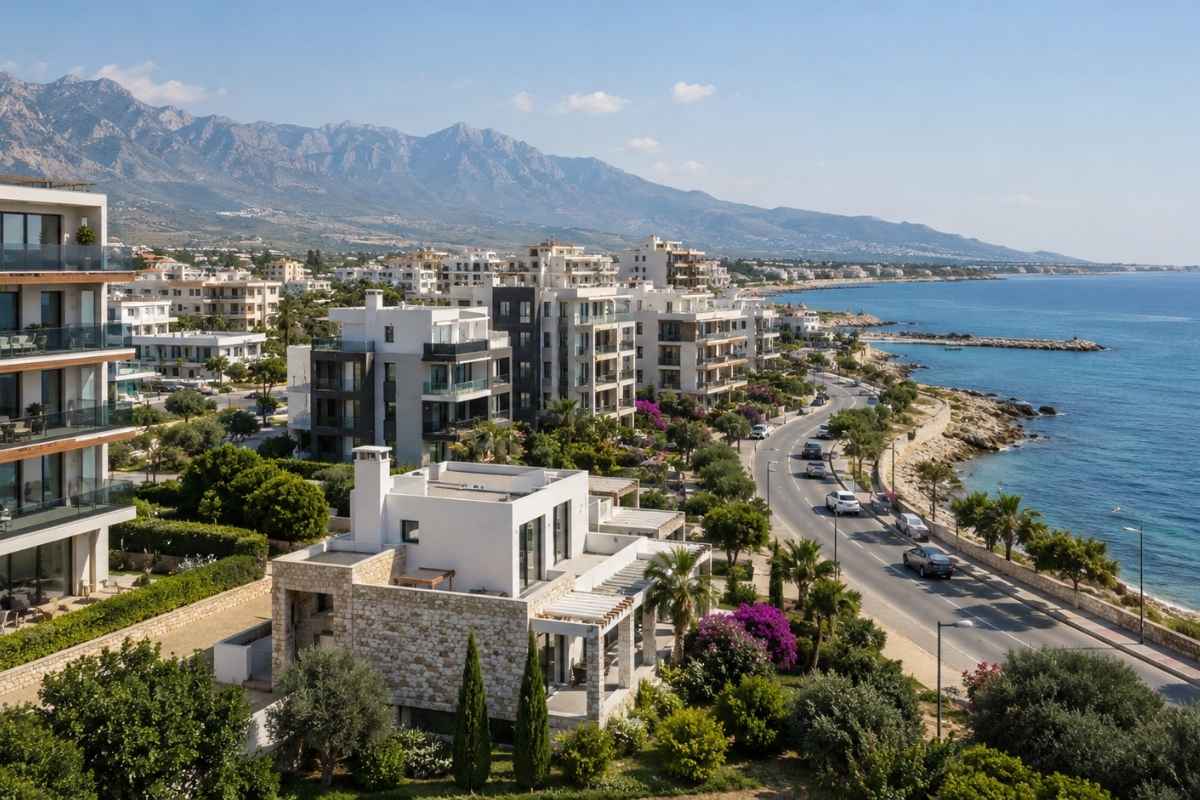
Another strong investment argument for North Cyprus is the expectation of GBP based rental income in certain areas. Rental potential in sterling can be attractive for investors who want to diversify their income balance beyond Turkish lira or euro based returns. However, here too, it is not enough to look only at gross rental expectations. Net rental yield should be evaluated together with property management, vacancy periods, service charges, maintenance costs, regional demand, and the balance of seasonal use.
Regions such as Gaziveren, Lefke, Iskele, Girne, and Esentepe offer different investment profiles. Gaziveren and Lefke stand out more with accessible prices, projects close to the sea, and development potential, while Girne and its surroundings attract attention with more established social life, infrastructure, and usability value. Areas such as Esentepe appeal to a different buyer profile with nature, sea views, peaceful living, and long term value expectations.
However, the North Cyprus market should not be evaluated with a “easy and risk free profit” mindset. In recent years, property regulations, foreign purchase rules, and permit processes have made legal due diligence more important for investors. Title deed type, purchase permit, developer reliability, delivery status, contract terms, and legal processes should always be checked with professional support.
For this reason, in the comparison of real estate investment in Dubai, Spain, Türkiye and North Cyprus for Turkish buyers, North Cyprus stands out with its accessible entry cost and cultural proximity. However, when making an investment decision, price appeal alone is not enough. The right project, the right region, a reliable developer, net rental potential, and solid legal due diligence are the key elements of a successful investment in the TRNC.
As a result, North Cyprus can still be a market that offers strong opportunities for Turkish buyers; however, these opportunities should not be evaluated without careful analysis. In 2026, the right investment in the TRNC will be possible not through the search for low prices alone, but by evaluating legal security, deliverability, rental potential, and long term usability value together.
Key Insight
North Cyprus attracts attention with more accessible entry prices and GBP-based rental potential in certain areas. However, an investment decision should never be made without thoroughly checking the title deeds, purchase permits, developer reliability, and delivery status.
| Market | Key Advantage | Things to Consider | Best Suited For |
|---|---|---|---|
| Türkiye | Strong domestic demand, familiar market, rental growth | Real performance, location selection | Buyers with ties to Türkiye |
| Dubai / UAE | Global liquidity, foreign currency rent, tax advantages | Geopolitical risk, supply concentration, net yield | Investors seeking international diversification |
| Spain | European quality of life, long-term value | Rental licenses, tax burden, regional rules | Buyers seeking long-term asset preservation |
| North Cyprus | Accessible entry prices, GBP rental potential | Title deed, permits, developer reliability | Investors with lower budget |
Market Selection by Investment Purpose
The right country selection should not be based only on market popularity. In 2026, a healthier approach for Turkish buyers is to clarify the investment purpose first and then choose the market accordingly. Rental income, lifestyle planning, a foreign currency based portfolio, a lower entry budget, or long term capital preservation goals may each bring different countries to the forefront.
Foreign Currency-Based Rental Income
Highlighted MarketsDubai / UAE, North Cyprus
Dubai offers a global rental market and high liquidity; North Cyprus stands out with GBP-based rental expectations.
Life in Europe & Long-Term Value
Highlighted MarketsSpain, Greece
Driven by strong motivations for European quality of life and long-term asset protection.
Familiar Market & Family Ties
Highlighted MarketsTürkiye
Domestic demand remains strong; offers high usability and emotional connection value.
More Accessible Entry Budget
Highlighted MarketsNorth Cyprus, Türkiye
Opportunity to purchase a second home or make a real estate investment with a lower starting budget.
Global Liquidity & Diversification
Highlighted MarketsDubai / UAE, UK
Dubai stands out with its international buyer base; the UK is a prominent choice for capital preservation.
Holiday Use + Rental Balance
Highlighted MarketsSpain, Türkiye, North Cyprus
Features regions that offer an ideal balance between personal holiday usage and seasonal rental potential.
What Should Country Selection Be Based on for Turkish Buyers Now?
In 2026, the most important question for Turkish buyers is no longer simply “which country is more profitable to buy property in?” The more accurate question is: which country is more suitable for which investment purpose? Türkiye, Dubai, Spain, and North Cyprus should not be evaluated with the same investment logic. Each market offers different opportunities, risks, rental potential, usage purposes, and exit strategies.
For this reason, the answer to the question "Where are Turkish buyers purchasing property abroad?" cannot be explained with a single country list. For some buyers, foreign currency based rental income may be the priority, while for others, quality of life in Europe may matter more. Some may look for a lower entry budget, while others may prefer a familiar market where they can maintain their connection with Türkiye.
Türkiye remains the most familiar and easiest to use market for Turkish buyers. Domestic demand is strong, the rental market is active, and interest from Turkish speaking buyers living abroad continues. However, when investing in Türkiye, the city, location, rental potential, and real price performance should each be evaluated separately.
Dubai and the UAE stand out for investors looking for a more global and liquid market. Foreign currency based rental income, off plan payment plans, an international buyer base, and tax advantages offer important opportunities. On the other hand, in 2026, geopolitical risk, supply concentration, project based competition, and net return calculations should be analyzed more carefully.
Spain has a different investment story in the post Golden Visa period. The main motivation is no longer obtaining residency through real estate investment; it is quality of life in Europe, long term asset preservation, rental potential, and a secure market structure. Therefore, the right location, rental licence, regional regulations, and tax planning have become more critical in Spain.
North Cyprus attracts attention with accessible entry prices, cultural proximity, GBP based rental expectations, and second home potential. However, in this market, legal checks, title deed structure, purchase permits, developer reliability, and delivery status should be examined especially carefully.
For this reason, overseas real estate investment for Turkish investors in 2026 requires more strategy. An investor seeking rental income and a buyer making lifestyle plans do not necessarily need to choose the same country. Dubai may be more suitable for an investor who wants to build a foreign currency based portfolio, while Spain may be more meaningful for someone seeking long term European living. An investor looking for a lower entry budget may consider North Cyprus, while Türkiye remains one of the most natural markets for buyers who want to maintain a strong connection with the country.
As a result, there is no single answer to the question “which country is the best?” The right country depends on the investor’s budget, rental expectations, usage purpose, risk tolerance, legal security expectations, and exit strategy. In 2026, the successful investor will not be the one who simply follows the popular country, but the one who selects the most suitable market for their own purpose based on the right data.
Alternative Markets: Why Should Greece and the UK Be Followed?
Although Türkiye, Dubai, Spain, and North Cyprus form the main focus of this article, it is also necessary to briefly evaluate some alternative markets followed by Turkish buyers in 2026. Greece and the UK, in particular, stand out as two separate markets that appeal to different investment motivations. However, these two countries are not equally suitable for every Turkish investor and should not be evaluated with the same expectations as the main investment destinations.
Greece has started to come more into focus for Turkish buyers considering European residency, especially after the end of Spain’s Golden Visa period. Geographical proximity, being part of the European Union, the Mediterranean lifestyle, and investment threshold options in certain regions make Greece a noteworthy market. However, the Greek market is not uniform. There are significant differences between Athens, Thessaloniki, the islands, and tourist regions in terms of price levels, rental potential, and investment thresholds.
For this reason, Greece may be an alternative worth following for Turkish buyers with a residency motivation; however, making a decision based only on the residency advantage is not enough. Regional regulations, short term rental rules, tax burdens, property management, and resale potential should be analyzed separately. Since every region does not offer the same investment logic, micro location selection is critically important in Greece.
The UK, on the other hand, appeals to a different investor profile. The UK real estate market, especially London, stands out for higher budget Turkish investors with motivations such as safe haven positioning, education, prestige, and long term capital preservation. For investors considering their children’s education, an international lifestyle plan, or long term asset diversification, the UK remains a strong reference market.
In contrast, the UK is a market that requires more professional analysis in terms of entry cost, tax burden, financing conditions, and the balance between rental income and total cost. For this reason, rather than being a mass investment route, it is more meaningful for upper segment investors focused on long term capital preservation. It should be evaluated not with the expectation of high short term returns, but from the perspective of portfolio diversification, prestigious location, and long term value protection.
As a result, Greece and the UK are alternative markets that should be followed within the agenda of overseas real estate investment for Turkish investors in 2026. However, rather than replacing main investment routes such as Türkiye, Dubai, Spain, and North Cyprus, these countries should be considered as complementary options for specific investment purposes. Greece is more meaningful for buyers seeking European residency and a nearby market, while the UK is more suitable for higher budget investors focused on long term capital preservation.
Pre-Purchase Checklist
For Turkish buyers looking to purchase property abroad in 2026, the most crucial aspect is not just selecting the right country, but buying the right property within the correct legal framework and with an accurate cost analysis. The checklist below summarizes the essential points to evaluate before making a decision.
Is the purpose of purchase clear?
Rental income, lifestyle plans, a second home, retirement, or capital preservation goals change the country selection.
Have total costs been calculated?
Taxes, title deed fees, service charges, maintenance, and management costs directly impact net returns.
Is the net rental yield calculated?
The gross rental rate alone is not enough. Vacancy periods, management fees, and complex dues must be factored in.
Has the legal process been verified?
Title deed type, permit processes, rental licenses, contract terms, and local regulations determine investment security.
Has regional demand been analyzed?
Not every city has the same rental and resale potential. Micro-location analysis is absolutely essential.
Is the developer or seller reliable?
Especially for off-plan or new projects, delivery history, financial structure, and references must be thoroughly reviewed.
Is there an exit strategy?
You must evaluate beforehand how quickly and to which target audience the property can be sold when needed.
Has the tax impact been examined?
Tax obligations in both the country where the property is located and the buyer's home country must be considered.
Has currency risk been evaluated?
Having income and expenses in different currencies can significantly affect overall investment performance.
Has professional support been sought?
Local legal, tax, title deed, and property management processes should always be reviewed with field experts.
Conclusion: In 2026, the Winning Investor Will Choose the Right Strategy, Not the Popular Country
In 2026, Turkish buyers’ interest in overseas real estate continues; however, investment decisions are becoming much more professional, selective, and data driven compared to previous years. It is no longer enough to look only at the question “which country is popular?” What matters most is the investor’s ability to choose the market that best fits their budget, rental expectations, usage purpose, risk perception, and exit strategy.
Dubai, Spain, Türkiye, and North Cyprus still remain among the markets offering strong opportunities for Turkish buyers. However, each of these countries has a different investment profile. Dubai stands out with global liquidity, foreign currency based rental income, and off plan opportunities, while Spain attracts attention with European quality of life, long term value preservation, and a secure market perception. Türkiye remains dynamic with both strong domestic demand and continued interest from Turkish speaking buyers living abroad, while North Cyprus offers a different option with more accessible entry costs, cultural proximity, and GBP based rental potential.
For this reason, the answer to the question "Where are Turkish buyers purchasing property abroad?" cannot be explained with a single country or a single list. In 2026, the right answer changes according to the investor’s purpose. The right market may be different for every buyer seeking rental income, lifestyle planning, a foreign currency based portfolio, investment opportunities with a lower entry budget, or long term capital preservation.
In particular, overseas real estate investment for Turkish investors in 2026 requires more careful analysis. This is because every market has risks as well as opportunities. Geopolitical risk and supply concentration in Dubai, changing motivations after the Golden Visa period and regional rental rules in Spain, legal processes in North Cyprus, and real price performance and location selection in Türkiye should all be at the center of the investment decision.
As a result, the winning investor in 2026 will not be the one who simply turns to the popular country. The winning investor will be the one who evaluates their budget, rental expectations, liquidity needs, legal security expectations, tax burden, usage purpose, and resale strategy together. Real estate investment in Dubai, Spain, Türkiye and North Cyprus for Turkish buyers still offers strong opportunities; however, achieving the right result starts with defining the right strategy before choosing the country.
Frequently Asked Questions
In 2026, Turkish buyers’ interest is concentrated around Türkiye, Dubai / UAE, Spain, and North Cyprus. Türkiye stands out with strong ties and usability value, while Dubai offers foreign currency-based rental income and global liquidity. Spain attracts attention with European quality of life and long-term value preservation. North Cyprus gains interest with its accessible entry cost and cultural proximity. Greece and the UK are also followed as alternative markets for specific investment purposes.
Yes, but in 2026, overseas real estate investment should be approached more selectively and with a stronger data-based perspective. Rental income, liquidity, legal security, tax burden, regional regulations, and exit strategy should be evaluated together. Not every country is suitable for every investor; the right market depends on the investor’s budget, goals, and risk tolerance.
Dubai can still be an attractive market for Turkish investors in 2026. Foreign currency-based rental income, off-plan payment plans, an international buyer base, and global liquidity are among Dubai’s strengths. However, investors need to carefully analyze geopolitical risks, supply concentration, service charges, net rental yield, and resale potential.
Spain can still be considered for investment in the post-Golden Visa period. However, the main motivation is no longer obtaining residency through real estate investment; it is quality of life in Europe, long-term value preservation, rental potential, and a secure market structure. The right location, regional rental rules, tax planning, and property management have become more important in this market.
When buying property in North Cyprus, title deed type, purchase permit, developer reliability, delivery status, contract terms, and realistic rental potential should be carefully checked. Accessible prices and GBP-based rental expectations can be attractive; however, no decision should be made in this market without proper legal due diligence.
You may also like
 Buyer AdviceWhy Invest in Real Estate in Türkiye: A Lucrative OpportunityDiscover the top reasons to invest in real estate in Türkiye, from strategic location to affordable prices and high returns on investment.4 min readRead article →
 Buyer AdviceLuxury Property in Dubai: Regional Price AnalysisDiscover luxury property in Dubai. Explore top areas like Palm Jumeirah and Dubai Marina. Apartments, penthouses, and villas await!3 min readRead article →
 Buyer AdviceA Comprehensive Guide to Buying Real Estate: What You Need to KnowLearn key steps for buying real estate, from budgeting to location tips, legal checks, and investment insights. Make confident property decisions!5 min readRead article →